



Understanding Operational Risk
Operational risk encompasses the potential for loss resulting from inadequate or failed internal processes, people, systems, or external events. Unlike market or credit risk, operational risk is inherent in all business activities and can arise from a wide range of sources, including human error, system failures, fraud, and external events such as natural disasters.
The Role of the Operational Risk Module
The Operational Risk Module is designed to help organizations identify, assess, monitor, and mitigate these risks. By leveraging this module, businesses can gain comprehensive insights into their operational processes, pinpoint vulnerabilities, and implement robust controls to prevent and manage risk effectively. Here’s how the Operational Risk Module enhances operational efficiency:
-
Identification of Risk Factors: The module provides a systematic approach to identifying risk factors across various operational areas. This includes assessing the likelihood of risks associated with internal processes, technological infrastructure, and external events. By mapping out these risks, organizations can prioritize their mitigation efforts.
-
Risk Assessment and Analysis: Once risks are identified, the module aids in assessing their potential impact. This involves quantitative and qualitative analysis to understand the severity and likelihood of each risk. By categorizing risks based on their impact, organizations can allocate resources more efficiently to address the most critical threats.
-
Implementation of Control Measures: The Operational Risk Module supports the implementation of control measures to mitigate identified risks. This includes developing policies, procedures, and technological solutions to reduce the likelihood of risk events. By automating control processes, organizations can ensure consistent application and monitoring of risk mitigation strategies.
-
Monitoring and Reporting: Continuous monitoring is essential to maintain operational efficiency. The module provides real-time monitoring and reporting capabilities, allowing organizations to track risk metrics and key performance indicators (KPIs). This ensures that any emerging risks are detected early and addressed promptly.
-
Incident Management: Despite best efforts, incidents can still occur. The Operational Risk Module includes features for incident management, enabling organizations to document, analyze, and learn from incidents. This not only helps in resolving current issues but also in preventing future occurrences.
-
Regulatory Compliance: Regulatory requirements are continually evolving, and non-compliance can result in significant penalties. The Operational Risk Module helps organizations stay compliant by providing tools to manage regulatory changes, conduct compliance assessments, and maintain audit trails.
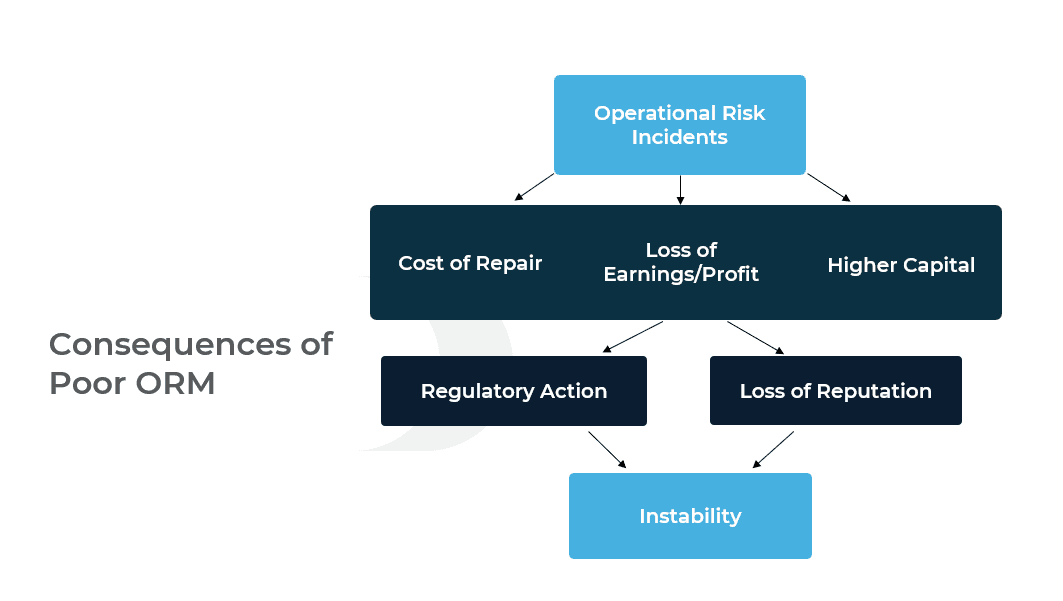
Consequences of Poor ORM:
Conclusion In conclusion, the Operational Risk Module is a powerful tool for assessing and enhancing operational efficiency. By systematically identifying, assessing, and mitigating risks, organizations can streamline their operations, reduce costs, and improve overall performance. In a world where operational risks are ever-present, investing in robust risk management solutions is not just prudent, it's essential for long-term success.
Other Articles you may like: